|
Two Nations and a Leaf
By Aparna Datta
It’s in vogue these days to talk of China and India in the same breath. Constant references are made to the political, economic, social and cultural systems of the two nations, the demographics and psychographics, the impact of information technology, which country gets how much FDI, how the hunger for oil in these two countries is reshaping the world economy.
But pre-dating all these contemporary themes, there is the leaf. The heritage of tea, in terms of cultivation and consumption, must surely be the original point of convergence and divergence in the China-India story.
Fables and Facts
Legend has it in the year 2737 BC, Emperor Shen Nung who then ruled China, was resting under the shade of a wild tea tree, when some leaves from the tree blew into his cup filled with water, which he had fortuitously boiled to drink. The aromatic brew proved enchanting and therapeutic, and being a benevolent ruler, the Emperor advocated the cultivation of tea, so that all his subjects could henceforth partake of this wondrous brew. And so tea was discovered for the benefit of mankind, its origin located firmly in China.
Not quite, goes another story, published in Planting Opinion (June 2, 1900)*. In this version, according to an old Chinese merchant in Batavia, Java, “it appears that the first introduction of tea into use as a beverage was almost accidental. Many years ago, some Buddhist priests, sent on a missionary expedition across country from India to China, took with them some dried leaves and also some cuttings of an indigenous shrub, an infusion of which was said to have the power of correcting the injurious properties of bad water…The decoction so greatly improved the flavour of the drinking water, that they adopted it as a regular beverage and after reaching China they gave some to their acolytes in that country.
“The Chinamen also liked the new drink, and they planted some of the cuttings. These grew up and were multiplied, but like most plants raised from slips they were not so vigorous as the original trees, and the bushes in China were smaller and with smaller leaves. But the beverage was so much appreciated that before long it became the favourite drink throughout China.”
In fact, Camellia sinensis is indigenous to India and grew wild in the districts running from Nepal eastwards along the terai regions and forests of Assam, through Manipur, Mizoram, Myanmar, Thailand, Vietnam and Laos to the Chinese provinces of Szechwan and Yunnan. Assamese tribes had drunk tea for centuries, particularly the Singphos and Khamtis, who even cultivated tea bushes. So, the claims of origin and discovery tend to get diluted when it becomes obvious that the tea bush, and history of cultivation, is actually shared jointly by China and India.
Customs and Traditions
In terms of tea culture, China took an early lead. China has contributed both the words ‘tea’ and ‘cha’ from the Fukien and Cantonese dialects respectively. The planned commercial cultivation of tea, processing, manufacture and methods of brewing were first initiated by the Chinese. During the Han dynasty (206 BC to 221 AD) tea became a common medicinal drink, and later, an article of trade. Buddhist monks contributed to the cultivation process through plantations that were developed around the most important temples, and by introducing new varieties and propagation methods. Experimentation and innovation in treating tea leaves resulted in brick formats; commerce saw the transportation of tea over some 1,500 kilometres across China to Tibet and Mongolia, carried on the backs of camels and yaks. Korea and Japan caught the tea habit from China. During the Tang period (618-907 AD) the popularity of tea reached greater heights, tea-houses were established, and tea-making and serving evolved. Potters, painters and poets all got into the act to celebrate tea as an art form.
Master tea maker Lu Yu wrote the first treatise devoted to tea, Cha Ching – The Classic of Tea in 780 AD. It was commissioned by Chinese tea merchants, and laid down strict rules with regard to etiquette and service, and elevated tea drinking into a spiritual realm. During the Ming dynasty (1368-1644), the Emperor put a stop to the manufacture of compressed tea, and loose leaf tea became the norm, with infusion the preferred method, which triggered the creative development of kettles and teapots made from clay and porcelain and cups without handles. Indeed, the art of tea is China’s gift to the world.
The Empire Strikes Back
The Dutch were the first to buy tea directly from the Chinese, and the first shipment took place in 1606 when the Dutch East India Company imported tea from Macao and unloaded it in Amsterdam. But by 1669, colonial rival Britain assumed monopoly over the tea trade taking over from the Dutch in Formosa (Taiwan), and by 1684 had established a trading post of the East India Company in Canton. The huge popularity and demand for tea in Britain fuelled smuggling and illegal imports; the British under pressure from the tough trading postures of the Chinese, dealt a devastating blow by flooding China with opium, such that both its economy and society suffered badly. Unwittingly, India played a part in this sorry chapter of history, being the region where the British cultivated the poppy.
When hostilities between Britain and China plummeted to new lows by 1833, later to become the full-blown Opium Wars of 1840-42 & 1856-60, tea imports from China were badly disrupted, which prompted the British to explore all options for tea cultivation in India. Interestingly, it was decided that the China plant be used instead of Assam tea, and in 1835 seeds were imported from China, which with local variety hybrids were produced in the Botanical Garden at Calcutta. They were sent to Dehradun, Kumaon, Garhwal and Kangra in North India and the Nilgiris and Wayand in the South, and to this day, the Kangra and Nilgiri teas have a distinct character, quite different from the robust Assam teas.
In the quest for green gold, Robert Bruce, once an employee of the East India Company, befriended Maniram Dutta Barua, an Assamese nobleman who guided Bruce to the abode of the Singphos in Assam, who had cultivated the plant for ages. Bruce obtained some specimens of the plant and was later joined in his endeavour by his brother C.A. Bruce, then superintendent of the Government Tea Forests in Assam, who successfully prepared a small sample of tea in 1836 from the leaves of wild tea bushes grown in nurseries with the help of the Singphos. From then on, there was no looking back, as the supply line of tea from Assam was assured.
In Darjeeling, wild tea bushes were found when the British annexed the region in 1835; by 1856 the first organized plantations were established. The China connection surfaces yet again in Darjeeling, acknowledged as the most celebrated tea origin in the world, where due to the high altitude, the China jat of tea bush does much better than the Assam type.
Green and black
Tending tea bushes was one thing; making tea was another. So Scottish botanist Robert Fortune, in Her Majesty’s service, disguised as a Manchu, went on an espionage mission in 1848 to uncover the secrets of tea production. From Shanghai he traveled to tea farms, interacted with a Buddhist monk who gave him valuable tips on water quality for infusing tea leaves, and ultimately returned to Calcutta with 80 Chinese factory owners and 20,000 tea plants, which were distributed throughout India.
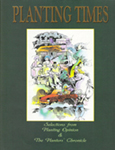
Some of these plants must surely have reached the Nilgiris, where in 1862 a small tea garden was established at Kotagiri by Margaret Cockburn, daughter of a pioneer planter. It extended to no more than 33 acres, and was all of the China variety. Her grand nephew F.M. Cockburn takes up the tale, reprinted in the book Planting Times: “None of the Hill people then knew anything about tea, either cultivation or manufacture, so a Chinaman was taken on as instructor, and all was done just as they had been doing it in China from earliest days. It was entirely a hand process…Rolling was done by kneading the leaf into lumps on a table with a corrugated top. It was a strenuous process, done by the hands while anyone was looking, but more than likely by the feet if no one happened to be there.”
While China maintained the tradition of green tea, India took the black route to fame and fortune. The small independent tea farms of China are a world away from the large commercial plantations set up initially by the British in North and South India, progressively with on-site factories that produce primarily black tea to cater to demand both from the domestic market and Western buyers. CTC (Crush Tear Curl), invented in 1931 by William Mckercher, Chairman of Amgoorie Tea Estate, revolutionized black tea manufacture, a phenomenon that has left China untouched. The tea industries, and grades of tea, in China and India are remarkably different, as much as the way tea is consumed in each country.
A Way of Life
China and India can both claim tea as the national drink of each country, each with a large production and consumption base, but that’s where the commonality ends. Green tea prevails in China, is consumed throughout the day with hot water for brewing tea never far away. In India, “English” style tea service, in a pot with milk and sugar, is found in upper-end homes; more often the tea is boiled along with milk and sugar and served in glasses with much froth; a variation with spices has caught the fancy of the West as ‘masala chai’. While tea consumption in China is part of a long tradition, in India, a special consumer campaign in the early 20th century initiated by the then British Government was responsible for getting North Indians habituated to tea.
Ultimately, the Chinese and the Indians have different concepts of tea cultivation, manufacture and consumption. The question is, which exemplar is pre-dominant worldwide? If tea-bags, iced teas and ready-to-drink teas are part of a black tea continuum, green tea is making much headway on the health platform. In exporting its tea culture, China is in the lead with national level tea museums, annual festivals and conferences and people of Chinese origin in key markets who have established distinctive tea rooms that extol the virtues of Chinese tea. The India tea paradigm merges with the European model, largely shaped by colonial history, and has more brand recognition at the retail level globally. But look deeper, and the strands of the Chinese and Indian tea stories get entangled at several points, often with British intervention. But then, in the end, as in the beginning, it’s the same leaf.
* Planting Opinion was a newsletter “written by planters for planters” that was started in 1895 in Coonoor in the Nilgiri hills of South India, and continued publication till 1902.
References:
1. Planting Times, United Planters’ Association of Southern India (UPASI), 2004
2. Tea Time, Beacon, Cassell & Co., 2001
3. The Story of Tea, by T. Damu, by Rupa & Co., 2003
4. The Story of Tea, by E. Jaiwant Paul, Roli Books, 2001
5. Tea by Jane Pettigrew, Chartwell Books, 1999
© Aparna Datta, 2005
Published in Tea & Coffee Asia magazine, 4th Quarter 2005
|