|
Teas from South India
The Nilgiris and Beyond
By Aparna Datta
Liquid copper in a cup, luminous on the cupping table. A tea with a fine fragrance and briskness that is stimulating, evocative. The mind’s eye sees blue mountains and red rhododendron; evergreen forests where the Nilgiri tahr, an endangered ibex, roams free along with elephants and lion-tailed macaques. Where the Malabar Whistling Schoolboy, a thrush, is a bird-watcher’s delight. And where India’s largest butterfly, the Southern Bird Wing, mesmerizes anyone lucky enough to spot it.
Teas from South India are distinguished by the unique biodiversity of their origin: the majestic Sahyadri, the mountain range running all along the west coast of India over a length of 1500 km and known to the world as the Western Ghats. The Sahyadri is one of the 28 hotspots in the world recognized by the International Union for Conservation of Nature (IUCN).
The Nilgiris, quite literally meaning ‘Blue Mountains’, are one of the most spectacular ranges in the Western Ghats, and the geographic origin of ‘Nilgiri’ tea. But there’s more to South Indian tea: in fact, there are five major tea planting districts in the Western Ghats, and three smaller ones, that are part of the three Indian states of Tamil Nadu (74,000 ha), Kerala (36,000 ha) and Karnataka (2,000 ha) with a total of 112,000 hectares currently under tea cultivation in peninsular India. Annual output from this region is around 200 million kg, 52 per cent of which is exported.
“South India has diverse agro-climatic zones, each differentiated by divergent mean altitude above sea level, divergent soil and climatic conditions,” says N. Dharmaraj, Vice President–Plantations of Harrisons Malayalam Limited, a company with significant planting interests in the High Range in Kerala. “The diversity manifests in a different type of tea from each region, each with unique and distinctive quality attributes.”
With separate histories, stakeholders and local heroes – the benign presence of British pioneers always resonant in planting folklore – each district has its own story to tell. Ergo, the key to effective sourcing of teas from South India lies in discovering the regions.
The Nilgiris
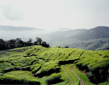
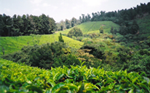
The heart of plantation country in South India is of course the Nilgiris in Tamil Nadu, where tea carpets the hills at elevations ranging 4,000 to 7,500 ft. From Coimbatore city in the plains it’s a 90 km, three-hour drive up to Ooty, the ‘Queen of Hill Stations’; the more romantic mode is the famous narrow gauge Blue Mountain Railway, which from Mettupalayam, winds up the hills through forests, tea plantations, 16 tunnels and some 250 bridges. There’s a convenient stop at Coonoor, the ideal point to head off into real tea country, with manicured gardens interspersed with protected parks and forests. Coonoor is the base of the southern regional office of the Tea Board of India and the headquarters of the United Planters’ Association of Southern India, better known as UPASI, the representative body of planters in South India that was set up in 1893.
The Nilgiris is where tea seeds were first planted in an experimental farm at Ketti in 1835, though on a commercial scale, the first tea estates were established at Thiashola and Dunsandle in 1859. Now owned by Hindustan Lever Limited, Thiashola acquired organic certification in 2003, demonstrating both continuity and change in tea cultivation. Further up is Korakundah tea estate, which dates back to 1930. A unit of the United Nilgiri Tea Estates Co., this estate is the first in the region to be certified organic (since 1997) and now the first to acquire the ISO 14001:1996 certification (May 2004) that governs environmental management.
Another historic estate is Nonsuch near Coonoor where sixty acres were planted with tea during the 1860s; near Kotagiri a Miss Cockburn planted tea in 1863 and even got a Chinese tea-maker to teach the locals how to roll the tea by hand. Estates with names such as Glenmorgan, Glenburn, Glenvans and Glendale besides Burnside, Craigmore and Rob Roy give a clue to the early settlers in these hills, and co-exist comfortably with Chamraj, Devarshola, Kairbetta and Kotada.
Characterized by high altitude and low rainfall, the Nilgiris yield delicately fragrant and bright teas. The Tea Board has introduced a logo so as to distinguish genuine Nilgiri tea; further, the Nilgiri Planters’ Association has introduced a certification trade mark for the 16 million kg of orthodox tea produced in 36 gardens in the Nilgiris.
Wynaad
To the West of the Kundah range of the Nilgiri hills is a lower, thickly forested broad step, and then the final steep descent to the plains of Malabar. This expanse of “dense undulating jungle” is the Wynaad in Kerala state. Initially opened in 1845 by James Ouchterlony and planted with coffee, the bugs and borers got to this area, followed by leaf disease which by 1875 devastated the district. A gold rush in the 1880s was another distraction but finally the planters of Wynaad came to their senses and settled back into planting with tea proving to be a winner.
At a lower elevation and with high rainfall, the Wynaad teas are known for their black leaf appearance and brisk/strong liquors.
Nelliyampathy
South of the Palghat Gap in Kerala state is the plantation district of Nelliyampathy. A dedicated planting district, the ‘Nellies’ were initially opened up in the late 1870s primarily for coffee. Some estates such as Manalaru of the AVT Group, were planted with tea in the 1920s, while Seethargundu coffee estate which dates back to 1889, undertook tea planting in 1993, the first large scale effort in tea post Indian independence in 1947. A unit of Poabs Organic Estates, Seethargundu is into biodynamic agriculture, certified organic since 2000.
One of the smaller tea districts, Nelliyampathy is in the medium range in terms of elevation and rainfall, and produces teas with good flavour and body.
Anamallais
They form a range running parallel to the Nilgiris from eighty to a hundred miles to the south. Southwards, the Anamallais in Tamil Nadu state merge into what is known as the High Range in Kerala. “When we first came to it in 1897…there were miles and miles of evergreen forest, with a few main paths…made by the huge herds of elephants which roamed there in the dry weather. During the wet weather there were millions of leeches,” writes Congreve, who along with Carver Marsh was a pioneer braving the malarial jungles. “Our dwellings were mud and grass huts, which leaked everywhere; our only tappal (mail) arrived weekly when we were lucky…”
Initially planted with coffee, a trio of Ceylon planters moved in around 1898-99 and successfully planted tea on estates that became part of the Stanmore Group. Another estate that opened around the same time was Iyerpadi, now part of Parry Agro and producing organic tea. Other plantation companies active in the area were Finlays, and the Bombay Burmah Trading Corporation (BBTC), known here as the Mudis Group, opening up several thousand acres, in some cases replacing coffee with tea. Today, the Anamallais tea district is one of the largest planting districts in South India, with Valparai town being a hub, and also the base of the UPASI Tea Research Foundation.
In the medium range in terms of both elevation and rainfall, the teas from this region are intensely full-bodied.
The High Range
Munnar in the High Range, also known as the Kannan Devan hills in Kerala state, is quintessentially a tea town and home to the Kanan Devan Hills Plantations Company Private Limited (KDHP). While Munnar is located at an altitude of 4,900 ft., the surrounding areas go up to over 7,000 ft., producing high-grown teas. The highest peak in India south of the Himalayas, the Anaimudi (8,841 ft.) is in the High Range. It is here that the Kurinji flower blossoms once in twelve years, covering the hills with a beautiful azure mantle, with the next blossoming scheduled in 2006.
In 1877, the local prince owing allegiance to the Maharajah of Travancore leased out a tract of land, measuring 588 sq. km., known as the Kanan Devan Concession Land. It became the base for the Kanan Devan Hills Produce Company established in 1897, which together with the other subsidiaries of the Glasgow-based Finlay Group opened 33 estates in the High Range. In 1964, a collaborative venture between the James Finlay Group and the Tata Group, a leading Indian conglomerate, was initiated to develop value-added teas; later, in 1983, James Finlay sold out to the Tatas. In March 2005, in a historic development, Tata Tea Limited divested its share in the South India Plantations Operations and handed over 17 estates to KDHP, formed by ex-employees of Tata Tea, resulting in one of the largest participatory management firms in the world.
India’s first tea museum is located at the Nullatanni estate in Munnar. Set up by Tata Tea in March 2004, it is now managed by KDHP.
Blessed with high altitude and high rainfall, the High Range produces exquisitely tangy and aromatic teas.
Central Travancore
The hills of Central Travancore, now southern Kerala, were first opened up in the 1860s, following the trail of the missionary Henry Baker, whose sons were pioneer planters in Peermade, where cool grasslands, wooded valleys and sheltered hillsides were perfect for planting. The estates were initially planted with coffee, which fell prey to leaf disease, and then developed into tea estates. Eastwards, this area extends into the Periyar Valley known locally as Vandiperiyar, with soil enriched by leaf fall of primeval forests, where tea has proved the most successful crop. Considered as low elevation with high rainfall, Central Travancore produces black teas with brisk/strong liquors.
Deep South and up North
At the tail end of the Western Ghats, the BBTC’s Oothu estate in the Singampatti area of Kerala is well known as one of the pioneer organic tea estates in South India. Way up north, in fact the northern-most planting district in the Western Ghats, is Chikmagalur in Karnataka state, earlier known as North Mysore, where a small amount of tea is produced in a largely coffee zone, mostly CTC.
Sourcing from South India
While ‘fragrant’ and ‘brisk’ are broad qualitative references for teas from South India, the elevation, the type of soil and quantum of rainfall, the plant material, the norms of cultivation and of manufacture, in effect, the estate origin, can all make a difference in the cup. This region gets both the South-West and the North-East monsoon, which impart distinct flavors in different months. Further revelations come in knowing the status of growers – about 40 per cent of South Indian tea is categorized as ‘small holding’, and some 95 per cent of small growers operate in the Nilgiris. Small growers process their teas at ‘bought leaf’ factories, the equivalent of localized coffee mills run by entrepreneurs. While orthodox manufacture was the norm earlier, recently much of the production in South India has turned CTC, with only select estates persevering with orthodox teas.
So, how does one navigate this territory and trace those rare teas? Actually, the signposts are self-evident, the markers part of the landscape. Look out for estates with consistently high standards of cultivation and manufacture – many are now ISO-certified with HACCP in place. An onsite tea factory is a given; indeed most tea companies are into continuous improvement, and have well-equipped establishments with cupping facilities. Social infrastructure is visible in schools, hospitals, rural telecom and post offices even in remote locations. The organized plantation industry in India is regulated through legislation that ensures good wages, perquisites, workers’ rights and job security; ‘fair trade’ is implicit in the system.
In South India tea is picked throughout the year, unlike North India where production shuts down during the winter months of December through February, so South India producers can ensure a steady and continuous supply, an important aspect for buyers. Teas of South Indian origin are eminently suited for ‘ready-to-drink’ as they do not turn hazy or muddy – a major criterion for iced and flavored teas.
Black or white, gold or silver tips, Earl Grey or oolong, green leaf or gunpowder, seek and ye shall find the finest grades and specialty teas. Tea trails in South India offer serendipity – the more you explore, the more gems that surface on your cupping table.
© Aparna Datta, 2005
N.B. An edited version of the article was first published in Fresh Cup magazine, USA in September 2004
|