|
Fresh brew in tea country
In an historic development, KDHP takes over from Tata Tea in the High Range of Kerala
By Aparna Datta
On April 1, 2005 nearly 13,000 tea plantation employees in Kerala state in India woke up to find themselves potential shareholders of their very own company. No, this was not an April Fools’ joke, but quite literally a dream come true.
For at the close of business on March 31, 2005, Tata Tea Limited had formally exited its South India Plantation Operation (SIPO), handing over to the newly formed Kanan Devan Hills Plantations Company Private Limited (KDHP) by deed of sale and transfer. Taking charge were ex-employees of Tata Tea in what is termed the Concession Area tea estates in the High Range in the Western Ghats in South India, signaling the end of an era, and the beginning of another.
The tea industry in India, business analysts, financial institutions and governmental agencies are tracking developments as they unfold, keenly observing this particular tea community located in Munnar, who have now donned the mantle as pioneers in a novel experiment that amounts to nothing less than a re-invention of the production and economic systems in tea manufacture.
A seismic shift is currently taking place in the tea plantation industry in India. Over the past 150 years, the dominant business model both in North India, comprising primarily the Darjeeling and Assam regions, and in South India in the several planting districts in the Western Ghats, has been management through large company-owned plantations with on-site factories. The first signs of change came in the 1970s, when small growers started operating in the Nilgiris, and subsequently in Assam, through state governmental support.
With the Tatas selling out, and Hindustan Lever Limited (HLL) transferring its tea estates to wholly-owned subsidiaries, as a prelude to possible divestment as market reports suggest, it would appear that the tide has turned for corporate investment in the plantation sector. Interestingly, both these blue chip companies have large packet tea businesses, which continue to thrive and will now constitute the core business in tea. Quite simply, Tata Tea has divested its plantation interests, but is scaling up its presence in the value-added branded tea sector, building on the acquisition of Tetley in the year 2000.
The reasons for the shift in business focus are not far to seek. Years of low international prices for tea, high production costs and the strain of managing a large workforce while maintaining good social standards, had taken its toll on the bottom line. In the last fiscal, on a turnover of Rs. 1440 million, the SIPO division of Tata Tea had incurred a loss of Rs. 126.6 million. Increasingly disenchanted with the plantation end of the business, Tata Tea finally decided to opt out, bringing to a close a process that had started in 1964 with a collaborative venture between the Tatas and the James Finlay Group that owned the assets of the Kanan Devan Hills Produce Company. This, the original sterling company, was set up in 1897 on a 588 sq. km tract of land leased in perpetuity from the local Poonjar prince, hence the term “Concession Area”. In 1983, the Tata Tea Limited bought out the stake of the Finlay Group, and emerged as the largest integrated tea company in the world.
Today, the trend is towards disintegration, or unbundling; however, this is largely related to the corporate strategy chosen by certain companies, and the rationale does not necessarily extend to the entire plantation sector. The trend is apparent in tea, which achieves its finished form at the estate level, unlike coffee that is sold as green bean. For proprietary planters, or those plantation companies that sell primarily in bulk, and own freehold land, estate and factory ownership remains viable. The dissonance appears to be largely in corporate tea companies with a retail presence, where the packet tea business involves branding and marketing, demanding wholly different skills and management processes. A schism develops in the seed to cup model, when plantation activities compete with marketing in claiming corporate resources.
“The rise of the bought-leaf factories has probably brought these issues into sharp focus,” feels Anil Bhandari, President of the United Planters’ Association of Southern India (UPASI). Small tea growers sell the green leaf to so-called “bought-leaf” tea factories run by entrepreneurs and businessmen, which then process the tea. In this production scheme, the norms of the Indian Plantations Labour Act of 1951 do not apply; when such teas are available at the auctions at competitive prices, they allow greater profit margins to packet tea manufacturers and marketers. The integrated plantation company teas, which carry larger overheads, are produced at a higher cost to company, and in a situation of low commodity prices, are clearly at a disadvantage.
While the Plantations Labour Act is exemplary, the obligations on account of wages, welfare and right to unionize has, over time, become a burden especially in India where the government does not share the social costs in providing education and medical facilities. When neither the government, or the market, reward plantation companies for upholding social standards, inevitably, such companies would be forced to evaluate their options and returns on investment, and would prefer to sell out if the business outlook appears negative in the long run.
What does all this mean to fourth generation tea estate workers? Today, in the High Range, there is a sense of a new dawn, a sense that history is being made. In the case of KDHP, this transition basically means going back to the future. These structural changes represent a whole new paradigm, with every labourer now getting the opportunity to become a genuine stakeholder. In fact, the workers identify completely with the new entity because the name resonates so strongly with the over 100 year old company name of Kanan Devan Hills Produce Company, also KDHP in abbreviation. Further, every aspect of corporate policy has been worked through as a labour of love, starting with the new corporate symbol that has been designed by a worker.
The new venture is a great leap of faith for the new management, led by T V Alexander, Managing Director of the new company and an ex-employee of Tata Tea. “We see this as an exciting opportunity to create an excellent and unique business entity, and are guided by the need to protect the interests of all our employees, and to preserve the ecology of these hills,” says Alexander. The core group of 56 managers will be responsible for the future destiny of this company that comprises 17 estates and 15 factories spread over 23,884 hectares, of which 8900 hectares are currently under tea cultivation.
In a message to the KDHP employees, Joy Joseph, Chairman of the new company said, “Like the pioneer planters and committed lot of men and women who had established these plantations, and later nurtured them as a permanent source of livelihood for four or five generations of people, all of you have taken up the daring task of rescuing and reviving these tea estates and also protecting the beautiful bio-rich environment of the region for the benefit of all concerned.”
The new management has its task cut out. A complete re-vamp of operations is in progress, with the approach being a bottom-up, participatory style of functioning, along with active involvement of trade unions. Even the company Board of Directors will have a representative each from the staff and the workers. Several measures are being taken to streamline production, improve quality and undertake re-planting of old tea bushes with new high-yielding clonal tea.
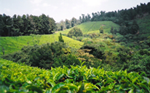
While the core tea plantation activity will get a boost, KDHP is particularly enthused by the fact that as per a recent policy initiative by the Kerala state government, five percent of the land holding can be used for diversifying into new businesses such as horticulture, floriculture and cultivation of medicinal and aromatic plants. Further, the company will promote plantation tourism by utilizing some 26 erstwhile managers’ bungalows, now equipped with mod cons while retaining their heritage value, for home-stay by eco-tourists. The Kanan Devan Hills around Munnar have some of the most dramatic landscapes in the Western Ghats, and remains a pristine environment thanks to careful management, so for an experiential tea tour this region holds great potential.
The new world order at KDHP effectively means decentralization, and a reshaping of attitudes to workers’ rights and responsibilities. It ushers in a more collaborative approach in the management of tea plantations, a sharp departure from the old colonial methods. KDHP has very high social and environmental standards, but there are no plans to obtain the multiple fair trade certifications floated by entities in developed countries – instead, buyers may seek to partner with KDHP, in view of the scope for ethical sourcing. KDHP will forge a relationship with Tata Tea as a preferred supplier. As of now, KDHP plans to offer its teas at the auctions under their estate names, but does not have plans to enter the retail segment.
In a scenario where some 25 tea estates in Kerala state alone have shut down on account of losses, and others in the Dooars region of West Bengal state are in dire straits, the KDHP story sends out a message of hope and inspiration. Endorsement of company plans came via the private placement equity issue floated in mid-May 2005: 97 percent of employees, cutting across all sections of the organization, have subscribed to shares in the new company, taking the employee ownership to 70 percent. But then, for the several thousand employees whose entire lives and careers are wrapped up in the Kanan Devan estates, there simply is no other place in the world they would rather be.
Corporate Social Responsibility – the Tata way
Over the years, Tata Tea had established several social welfare projects at Munnar, which today have an annual outlay of Rs. 30-40 million. Happily, the Tatas will continue to support the projects directly through a Trust, so that these costs do not act as a drag on the bottom line of KDHP.
Tata Tea will continue to maintain and fund the High Range School and the Tata General Hospital at Munnar. The company will also sustain the projects at the Srishti complex that comprise a center for special education, a unit for making strawberry preserve, a hand-made paper unit that supplies stationery and craft items to offices and gift shops, and a natural dye project that produces fabrics and made-ups for export – all set up as vocational training and employment schemes to rehabilitate differently-abled children of tea estate workers.
© Aparna Datta
Published in Tea & Coffee Asia, 2nd Quarter 2005
|