Tourism: Alternate
revenue stream for tea and coffee plantations in India
By Aparna Datta
The largest tracts of privately held land in India may well
be in tea and coffee plantations. With costs of production
sky-rocketing, and earnings fluctuating according to international
commodity prices, estate owners are now looking to diversify
their lines of business and optimize their assets. Along with
other cultivation options such as horticulture, floriculture,
etc., tourism is rapidly becoming a popular additional revenue
stream.
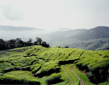
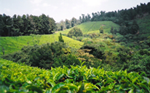
A key factor is the geographical location of these estates
– tea estates in north-east and in south India and coffee
estates in south India have picturesque settings amidst gentle
rolling hills, wooded landscapes often sharing a border with
reserve forests and wildlife sanctuaries. The tea estates
in the north east, particularly in Darjeeling district, have
the awe-inspiring Himalayas as the backdrop, while the southern
estates are all in the Western Ghats, with spectacular bio-diversity.
The other critical element are the historic planters bungalows
set up by the European planters, some easily a hundred years
old, yet still gracious and evocative of bygone days. Remarkably,
all plantation bungalows, especially the main manager’s
bungalow, are located at a vantage point, often on the crest
of hills, overlooking an expanse of tea and coffee fields.
Now too sprawling, and perhaps with kitchens not equipped
with mod cons suitable for the current generation of plantation
managers and their families, these bungalows are now being
put to good use as the central attraction in a travel package.
Refurbishing these bungalows and adapting them for tourists
requires funds, so plantation tourism is primarily handled
directly by companies, or tour agents who lease the bungalows
from tea and coffee companies.
One of the first to explore this form of destination tourism
was Orange County Resort in Coorg, Karnataka state set up
in 1995 by the Ramapuram Group based in Bangalore, which set
aside some 30 acres of a coffee estate for their tourism project.
Another early mover was V K Rajaram who created Tranquil –
A Plantation Hideaway out of the bungalow on the Kuppamudi
coffee estate in Wynad, Kerala state.
More recently, the Kanan Devan Hills Plantation Company,
with extensive tea holdings in the High Range, and with its
base in Munnar in Kerala state has actively pursued plantation
tourism, and Tata Coffee Limited based in Polibetta in Coorg
district has launched a division to develop tourism at some
of its estates in Karnataka.
Other projects include Glenburn Tea Estate in Darjeeling,
West Bengal state. Makaibari estate owned by Rajah Banerjee,
also in Darjeeling has an exclusive property available for
guests.
Purvi Discovery based in Dibrugarh, Assam state offers tour
packages in which tourists can experience hospitality in 19th
century Chang bungalows. These bungalows built on stilts are
unique to the north east region.
McLeod Russel of the B M Khaitan Group of Kolkata has joined
hands with River Journeys and Bungalows of India Pvt. Ltd.,
promoted by Ranjit Barthakur to develop a project at Addabari
Tea Estate in Assam, renaming it as Wild Mahseer, a British
Assam Heritage Property.
The Assam Company Ltd. is also in the process of developing
a tourism project to utilize their bungalows at Greenwood,
Salonah and Maijan tea estates that are strategically located
near the Brahmaputra river.
Apart from the corporate endeavours, there are several private
initiatives in both the north east of India and in Southern
India. Many are simple homestays, when one or two of the rooms
in a bungalow are rented out, with resident family members
providing meals and service.
As more and more projects are developed, it remains to be
seen if all will be economically viable in the long run, especially
as the north east estates are often involve long journeys
by road and air connectivity is weak. For the moment however,
it’s great to see conservation taking place and heritage
bungalows being restored to their former glory. Another benefit
is the attention being given to the environment, with forests
and wildlife being preserved for eco-tourism and local villagers
becoming more conscious of the need to sustain their habitat.
Also, local inhabitants are getting employment at the resorts
as well as in other tourism-related activities such as transportation
and sight-seeing. Plantation tourism not only improves the
asset values for the companies and entrepreneurs involved,
but improves the livelihoods of the local people as well.
For the 150-year old plantation industry in India, it’s
a whole new chapter in sustainable development.
PENSCAPE – August 2006
|