On the Indian
specialty tea trail
By Aparna Datta
It’s called a Peony Rosette and a single piece costs
Rs. 50 – a little over a dollar. Made from specially
grown tea leaves, delicately woven into a rosette, it comes
to you in a transparent glass cup. You pour in steaming hot
water, and simply watch while the rosette unfolds: the clear
liquid turns amber, and a subtle fragrance awakens your senses.
It’s your moment of Zen.
Consumer delight in such sensory pleasures has prompted Infinitea,
purveyors of fine teas, to experiment with yet another hand-crafted
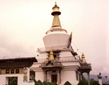
tea. They call it the Stupa-A, and it’s a tiny monolith
of enchantment.
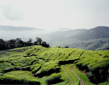
But then, to the owners of Gopaldhara Estates of Darjeeling,
such specialties come naturally. Darjeeling orthodox teas
have a 150-year reputation to live up to, and for the inheritors
of this legacy, there’s no stone, or leaf, left unturned
in the pursuit of excellence in tea-making.
Starting in the early 1990s, first Darjeeling, and then the
Nilgiri region have quickly moved up the value chain. Conversion
to organic was simply the beginning of other explorations
into the world of specialty teas. Take Ambootia, where biodynamic
cultivation forms the basis. At this Darjeeling estate, tea-making
is a passion, which finds expression in specialty varieties
such as ‘Millennium Tea’, a brisk tea tempered
with the ambrosial fragrance of tea flowers, and ‘Moon
Tea’, in which cosmic forces harnessed on a full moon
night produce a sparkling and enlivening tea, and ‘Snow
Mist Tea’ where the delicate Pak Ho leaves produce a
mellow, sweet and aromatic tea.
But the real revelation in Indian specialty teas comes from
South India. Amidst an ocean of CTC, an entire planting fraternity
is set to raise the quality bar. The Nilgiri Planters’
Association lists among its members certain estates and factories
that are producing orthodox teas that deserve, nay, demand
a second, serious look.
Glenmorgan Estate has perfected its line of green teas, making
pearl, gunpowder and oolong varieties of outstanding character
and taste. At Chamraj estate, Earl Grey, white teas, golden
tips are par for the course.
While sourcing from South India, it’s worth bearing
in mind that this region gets both the South-West and the
North-East monsoon, which impart distinct flavors in different
months. In South India tea is picked throughout the year,
unlike North India where production shuts down during the
winter months of December through February, so Nilgiri specialty
producers can ensure a steady and continuous supply, an important
aspect for buyers.
So, how to navigate the Indian specialty territory and trace
those rare teas? Actually, the signposts are self-evident,
the markers part of the landscape. Look out for heritage estates
with consistently high standards of cultivation and manufacture
– many are now ISO-certified with HACCP in place. An
onsite tea factory is a given; indeed most tea companies are
into continuous improvement, and have well-equipped establishments
with cupping facilities. Social infrastructure is visible
in schools, hospitals, rural telecom and post offices even
in remote locations. The organized plantation industry in
India is regulated through legislation that ensures good wages,
perquisites, workers’ rights and job security; ‘fair
trade’ is implicit in the system. In India, producing
premium tea is a holistic approach, a 360 degree concept of
cultivation and manufacture, combined with sound social and
environmental processes.
Black or white, gold or silver tips, Earl Grey or oolong,
green leaf or gunpowder, seek and ye shall find the finest
grades and specialty teas. Tea trails in India offer serendipity
– the more you explore, the more gems that surface on
your cupping table.
PENSCAPE January 2005
|