Fair and square:
Acknowledge the origin if the cup is good
By Aparna Datta
It’s not just the caffeine content in tea and coffee
that’s causing discomfort these days. For consumers
who like these beverages for their refreshing, pick-me-up
qualities, the guilt trip being laid on is more like a put-me-down.
“There’s poverty in your coffee cup” was
the theme of an Oxfam campaign rolled out in 2002, which pointed
a finger at the “Big Four Roasters” – Sara
Lee, Kraft, Procter & Gamble and Nestle – for buying
nearly half the world’s coffee crop and making huge
profits. Some three years on, the coffee crisis has hopefully
played itself out, with coffee prices on the international
commodity exchanges currently on an upswing. In the meantime
though, various Fair Trade labeling systems, such as TransFair,
Café Direct and others, have taken root and developed
a consumer franchise. In the bad old “coffee crisis”
days fair-traded coffees were pegged at around US$1.25 per
lb for regular and around US$1.40 per lb for certified organic
beans. The question is: in the current bull market, do the
premiums for fair trade and organic remain? Fair trade and
organic certifications are obtained and paid for by growers
who conform to prescribed standards; they are obliged to maintain
these benchmarks irrespective of market price fluctuations.
So, is the system of brownie points itself sustainable? If
there is price sensitivity at the consumer’s end, will
retailers reduce their margins so that price premiums to producers
can continue?
Another bitter aftertaste is evoked in two recently published
books on tea. Sample this blurb from the book jacket of Roy
Moxham’s “Tea: Addiction, Exploitation and Empire”
(Constable, 2003) “…Intrepid and eccentric British
planters opened up hundreds of square miles of tea. Over one
million workers were moved to the plantations, like slaves,
bought, sold and stolen. When the British lost their Empire,
they retained control of much of the world’s tea business,
and high profits and low wages still flourish in the time
of the tea bag, multinational tea brands and supermarket strangleholds.
The British addiction to tea endures. Nor are they alone:
tea is now easily the world’s most popular drink, the
ultimate comforter and salve for every woe, even immortalized
by poets. Yet behind its wholesome and refreshing image lies
an extremely violent and murky past, one entertainingly, though
often chillingly exposed here for the first time.”
The book “Green Gold – The Empire of Tea”
by Alan Macfarlane & Iris Macfarlane (Ebury Press/Random
House, London 2003) takes an insiders view of the industry
- Iris Macfarlane spent 20 years in Assam as a tea planter’s
wife – and presents a multi-dimensional understanding
of the evolution of tea cultivation, trade and consumption
around the world. Indeed, it’s a balanced view, bringing
in a range of voices. The authors make a point about fair
trade: “Tea has been an enormous boon for many countries
in the world. It should not be beyond the wit of richer nations,
and India herself, to ensure that a fairer amount of the profits
made from it, as well as from oil and gas, be returned to
the people who work in Assam. Extreme actions and boycotting
would put the jobs of hundreds of thousands of very poor people
at risk. Yet, fair trade, with profits going to producers,
should be examined closely in relation to the plantation commodity.
Just as it is being examined as a way of improving conditions
in the production of cocoa, coffee, rubber, cotton, sugar
and other tropical plantation crops, so the considerable profits
in tea, and the pleasures of the drinker, should be benefiting
the tea labourers much more. It would only seem fair that
some of the wealth generated by green gold, which has hitherto
flowed elsewhere, should help the people of Assam.”
(Page 252).
A related issue is that South Asia is off the map as far
as major fair trade and eco labels are concerned: such labels
are emerging as instruments of market access, and serve as
risk management tools for large retailers. Rainforest Alliance
and Conservation International, besides TransFair and Café
Direct prefer to concentrate their efforts in Central and
South America, occasionally Africa. Organic certifiers such
as Skal, IMO, SGS and Naturland are more active in South Asia,
but the conversions/certifications are closely co-related
to market demand. The Ethical Tea Partnership currently does
not have uniform coverage across all tea producing countries.
The Common Code for the Coffee Community has had a lukewarm
response from producing countries, primarily because buyers
are non-committal on the recompense for the enhanced standards.
Labels and certifications work well for single origins and
estates, but it’s unclear how the criteria get applied
in the case of blends, generally preferred by coffee roaster-retailers
and packet tea companies. When it comes to the crunch, would
buyers opt for ethical, more expensively produced coffee or
tea over bags/cartons of similar quality, available at a bargain,
because certain ethical standards were not mandatory? The
question being asked is how certain teas, for instance, can
be termed ethical, when the prices paid by buyers are below
the cost of production at the growers’ end? In some
cases, it appears that concessions are being made on traditional
quality parameters for the sake of being politically correct.
Western consumers who choose to buy only on the basis of
labels and certifications run the risk of missing out on teas
and coffees from South Asia that combine quality as well as
ethical values. Fair trade labels apply to farmer cooperatives;
coffee plantation companies in the corporate sector are not
eligible, despite conforming to or even exceeding social preconditions.
The fact is that the organized tea and coffee plantation
sector in South Asia has pretty decent social standards. The
history of plantation development by the British is relatively
benign: Assam was rather more difficult, but the experience
in South India was peaceful and ultimately led to positive
economic and social outcomes. Post Independence in 1947, British
planters in India simply walked away: they sold out, and left
the assets to locals to maintain and develop. India has a
remarkable piece of legislation in The Plantations Labour
Act (1951) that protects workers and ensures fair wages, perquisites,
workers’ rights and job security, besides stating norms
for housing, educational and medical facilities. Inevitably,
such measures also push up the cost of production, and make
India less competitive vis-à-vis other tea and coffee
producing countries with fewer welfare obligations. If there
are delinquent estates, it is more due to individual cases
of poor management, rather than pervasive neglect or exploitative
practices.
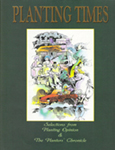
Two books published by the United Planters’ Association
of Southern India (UPASI) should set the record straight as
far as tea and coffee plantations in South India are concerned.
“A Planting Century – 1893-1993” by S Muthiah
(Affiliated East-West Press 1993) and “Planting Times
– Selections form Planting Opinion and The Planters’
Chronicle” (Macmillan India 2004) contain archive material
spanning some 200 years – with little evidence of violence
or forced labour, and with plenty of agreeable insights into
the plantation industries.
In sum: identify the origin, the source, i.e., country, region,
estate, if the quality and ethical standards are acceptable,
based on a fair assessment of intrinsic values. Chances are
such declarations, indicating buyer-seller affiliations, would
encourage transparency and the benchmarks for the entire tea
and coffee sector would improve. And the consumer will be
delighted to imbibe a guilt-free cup.
PENSCAPE – April 2005
|