|
THE LADY MEMBER
By Aparna Datta
Sipping tea at a verandah table while chatting with friends, enjoying a round of bridge, or taking a quick lap around the swimming pool, she looks like any other of the ladies who club. But watch her signing a chit, and you’ll know she’s different. She signs on her own account, for she’s an individual member – a lady member.
It’s a hard-won signature at the erstwhile “gentlemen’s club.” Only recently have special membership categories been introduced for ladies at the elite clubs in India, ushering in a change in their status from “dependent” to “independent.”
Clubs in India have long been considered as male bastions, indeed in the early days the movement of women in clubs was largely restricted. At the Bangalore Club, which dates back to 1868, women were initially relegated to the ‘Dove Cote’ (the cottage). In 1907, the Annexe was built, and women got to be elected formally, with the proviso that they were “elected to the Annexe” and not to the Club. According to A Club’s World, published in 1993 to commemorate 125 years of Bangalore Club, it was only with the construction of married quarters, that “the entry of ladies on specific occasions, for specified purposes, in specified areas of the main Club became inevitable.” Much later, around 1939, the concept of a ‘mixed club’ gained momentum and women were progressively allowed greater use of the club facilities.
The scene at the Madras Club, established in 1832, was no different. Old-timers will remember the “moorghi-khana”, a special area that was reserved for women, quite literally the hen house! At the Calcutta Club similar zenana-style segregation existed at the Ladies annexe that opened in 1920; only much later were women allowed into the main building. Till the 1950s, ladies could not even enter the Calcutta Club through the main door, but were obliged to use the tradesmen’s entrance.
Though women had no official standing, and did not appear on the list of members, there’s no doubt that during the British Raj women benefited a great deal from these social meeting places. Afternoon tea parties and garden parties became popular from the middle of the nineteenth century, with keen rivalry between hostesses.
Cut to the present: the club as battleground of the sexes has altered dramatically with men probably muttering dolefully that women have taken over the place! They are seen on the fairways, at the billiard table, in the card room, the health club, and some facilities cater specifically to women. Certainly the grocery store and the ladies beauty parlour at the Bangalore Club thrive on the patronage of the fairer sex.
So, what’s left? Still out of bounds for women at some Indian clubs is the exclusively gents bar, absolutely the last refuge for male solidarity and the old boy network. The unambiguously named ‘Men’s Bar’ at the Bangalore Club remains true to its tradition, as does the stag bar at the Calcutta Club.
If at one time the subject of Indian membership of clubs ‘almost split the Empire’, as Charles Allen writes in Plain Tales from the Raj, the issue of admitting lady members is still alive and kicking. At an extraordinary general meeting held in May 2004, the Cricket Club of India (CCI) at Mumbai voted ‘yes’ to women as independent members. For the 67-year old club, this has meant a huge break from the past, and it hasn’t come without a fight, with the die-hards staunchly opposing the move. Hectic lobbying over the past year saw women holding meetings, launching signature campaigns and seeking legal advice. Finally, the pressure tactics paid off, and maidens have bowled over the cricket club.
The CCI rules, though, were more or less in line with the general practice at clubs in India, where members’ sons can become members, on application, when they turn adults. Members’ daughters remain ‘dependent’ members and forfeit the right when they marry; if they happen to marry a club member, they again become a ‘dependent’ member. It’s perhaps one way of hedging membership at city clubs with huge waiting lists, though at the planter’s clubs, where there’s less pressure, and where there’s a strong sense of community, the rules are more flexible. At the Kadur Club in Chikmagalur, for instance, a case-by-case approach allows widows to use the club after a planter-husband passes; daughters of planters, if they happen to get divorced, or if their husbands aren’t interested, join as individual members.
But there’s still a distinction between a lady member and a full member – voting rights! Even if a woman’s right to vote was enshrined in the Indian constitution in 1949, the clubs of India are largely impervious to the concept. Lady members are generally treated as ‘associate’, ‘ordinary’, ‘temporary’ or ‘non-voting’ members. The Bombay Gymkhana started enrolling women in 1991, but it was only after a court battle in 2002 that women were allowed to become full members with voting rights. Real equality came in September 2003 when women were allowed to contest elections, and two women came onto the balloting committee that decides on new membership.
The Bangalore Club appears to have had a more liberal policy. The historic register of lady members records Miss N. Kothawalla as being admitted to the Club effective January 1, 1947, just as soon as the Club made the transition from a services club to civilian club. From the 1970s, the number of lady members increased, when women achievers started getting accepted into the fold. From year 2000, lady members were given voting rights, and since then, the club rules have been amended such that the membership of the Bangalore Club in general is now open to gentlemen and ladies.
Perhaps a day will come when a lady member is voted in as the President of her club! In fact, in neighbouring Bangladesh, Dhaka Club elected Ms G H Sofia Choudhury as President in 2003, an event that was duly noted in awe, and not a little envy, by the club-going ladies of Calcutta.
Membership clubs present perhaps the most elegant of public spaces – and, for women, the safest, and acutely civil. It is an institution of distinctive urbanity – once ‘in’, the ethos of the club ensures that a woman member gets to be treated like a lady at all times.
And yet, gets to be indulgently feminine. While time-honoured sartorial rules at most clubs dictate that men wear shoes, even jacket and tie on certain occasions, ladies can wear pretty much whatever they please, barring shorts in the ‘formal’ zones. Slippers or sandals, skimpy choli or skirt, a woman can flaunt it if she’s got it – best of all, she can be her liberated self.
By the social standards of the twenty-first century, some of the conventions of colonial clubs, particularly those that govern lady membership, might seem quaint. But folks with a sense of history will appreciate the evolution of clubs since the days of the Raj, and the enhanced presence of women, which makes lady membership at these clubs quite a phenomenon. It’s social mobility with a positive gender bias – and cheers to that.
© Aparna Datta, 2004
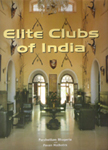
Published in the coffee table book “Elite Clubs of India” published by Bhageria Foundation.
Website: www.eliteclubsofindia.com
|