|
Land of the Thunder Dragon
By Aparna Datta
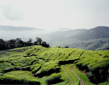
Nothing quite prepares you for the dramatic descent at Paro Airport. On a Druk Air flight from Kolkata, the plains and tropical forests suddenly give way to the foot-hills of the Himalayas and you begin to wonder where at all the plane could land in that mountainous terrain. Then a green valley emerges, an idyllic patchwork of paddy fields, streams and an airfield at an altitude of 7,425 feet, with one of the shortest runways for take-off and landing in the world. Even as you catch your breath, the plan would have landed, and you are ushered into a small, elegantly decorated terminal building.
Welcome to Bhutan. As a travel destination, Bhutan is perhaps one of the best-kept secrets on the Indian sub-continent.
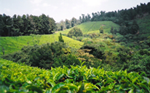
Bhutan, or Druk Yul – Land of the Thunder Dragon – as the locals call it, is still a mysterious and relatively unknown destination. In the same region, Nepal and Sikkim are better known; this is largely due to the policy of the Bhutanese government that places strict limits on the number of tourists allowed in every year. As a result, a tourist can look forward to pristine natural beauty: a countryside of rolling mountains and deep gorges, bubbling streams and yak pastures. No plastic bags in paradise!
The country is listed among the world’s 10 hot spots for bio-diversity and the natural environment makes a strong impact. From the moment you land, what strikes you immediately is the pollution-free atmosphere. Clean air, clean rivers and streams, greenery all over – the country has green cover f 72% - and an unchanging rhythm of life.
Along with the mountains, the other dominant features of the landscape are the monasteries, the chortens or memorials and the prayer flags fluttering in the wind. The Buddhist ethic prevails and lends a distinctive character, both in terms of visual appeal as well as the cultural heritage. Early morning, you will notice columns of smoke rising from the small structures in a garden – a fire would have been lit to purify the air and frighten away the evil spirits that roam around during the night. A waft of breeze would bring the sounds of rhythmic chants from a nearby monastery. The peace and tranquility are awesome.
In Bhutan, the spiritual and the temporal go together and symbolic of this is the dzong, the monastic fortresses that dominate each valley. The dzong is the administrative center, while also providing guidance in religious matters, and all major festivals are celebrated under their shadow. The daily life in the villages is strongly linked to the dzong.
As one of the few functioning monarchies in the world, Bhutan is till a hierarchical society. With an area of 47,000 square kms, the country has never been colonized, thanks to its geography that has helped in preserving its independence, and the 750,000 people are keenly aware of their cultural identity.
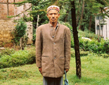
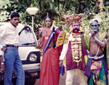
The Bhutan brand is evident everywhere. People uniformly wear their national dress – the knee-length gho for men and the ankle-length wraparound kira for women – and could get fined if they are found wearing western dress in public places. The Bhutanese are justifiably proud of their colourful hand-woven textiles, using silk, wool and cotton with the most exquisite geometric patterns.
The national sport is archery, now often played with high-tech equipment but traditionally with bamboo bows and arrows. An archery contest is a major event and sees as large turnout of spectators. Apart from the male participants, women cheer-leaders are also a distinctive group, dancing and singing in support of their own team and distracting the rivals! When the arrow lands close to the target, the men whoop in delight and do a little celebration dance.
The national dish is ema datsi, a stew made from green chillies and cottage cheese that can set one’s mouth on fire! In fact chillies, red and green, are integral to most of the dishes, which are eaten with red rice, buckwheat noodles and pancake and sometimes barley and millet. Dried yak meat and pork are most popular.
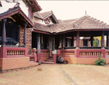
Bhutanese architecture has distinctive characteristics and all buildings conform to a definite style, using lots of timber and mud walls with painted facades. They blend so neatly into the landscape that, with the mountains in the background, there is a picture postcard prettiness to all structures, big or small.
The tourist trail begins either at Phuntsholing on the overland route from India, or at Paro which is the only airport. The national airline, Druk Air, is the only airline to fly into Bhutan and connects Paro with New Delhi and Kolkata, besides Kathmandu, Bangkok and Dhaka.
Paro valley is unbelievably beautiful. The Paro dzong sits nestled on a hillside with the must-see National Museum located in an old watch-tower a little higher up. Other local tours include the Drukyel Dzong, which got burnt down in the 1950s and is now a protected monument, the Taksang or “the tiger’s lair” which literally clings to a vertical rock-face and the monastery Kyichu Lhakhang.
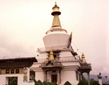
Moving on from Paro, 65 kilometers away is the capital city Thimphu (7,920 feet). Like all capital cities, the city feels “official” yet would rate as one of the most photogenic in the world. The Tashichodzong, housing the central secretariat, sits dramatically in the valley, while the National Chorten, a memorial to the third king Jigme Dorje Wangchuk is yet another important monument. Depending one one’s interests, there are a number of other places to visit, ranging from a hand-made paper factory, incense-making factory, hospital for traditional medicine and the school of arts and crafts.
There is also the National Library, which has a wonderful collection of books on Buddhism and Himalayan references, and a variety of emporia stocked with Bhutanese handicrafts.
Beyond Thimphu, one needs a permit, best organized through a tour operator, and a specific reason to visit such as trekking, fishing or bird-watching. The major tourist attractions are the festivals, which are held round the year at various monasteries and dzongs, on auspicious dates. Apart from the religious ceremonies in which the locals participate in large numbers, tourists can also watch colourful dances. The highlight of many a festival is the unfurling of the thongdrol, a gigantic religious appliqué made of silk, the darshan of which can bring deliverance from suffering.
But Bhutan is not for everyone. If you go expecting shopping malls, theme parks, discos or pubs and an exciting nightlife, you will be disappointed. Bhutan is perhaps one of the few destinations in the world that still retains a raw, natural beauty and has not succumbed to the commercial side of tourism. So, if you want silences that speak, an atmosphere that elevates, then Bhutan is it. For more information, visit: www.kingdomofbhutan.com
© Aparna Datta
Published in Deccan Herald, Bangalore June 17, 2001
|