|
Cosmic vibrations in a coffee cup
The Indian experience in biodynamic coffee
By Aparna Datta
This coffee is rare. So rare, in fact, that it is cultivated in fewer than a dozen farms around the world. Its personality type is 'deep green', even spiritual, and its got a "wellness" glow. It's so far beyond organic that it requires its own moniker: biodynamic. And it's from India.
Coffee from India? Biodynamic? Be pleasantly surprised. Over the past decade, the latest chapter in the biodynamic saga has been scripted on a couple of coffee estates in the Western Ghats of South India. The Indian version of biodynamic agriculture is unique, blending age-old Vedic agricultural practices with European science to supplant the chemical dependency that has marked the so-called Green Revolution, and establish a paradigm for coffee growing that is environmentally sustainable and economically feasible. It's as if Dr. Rudolf Steiner's revolutionary mantra has finally come home.
A Holistic Approach
The origins of biodynamic agriculture date back to a series of lectures delivered in 1924, by Austrian scientist and philosopher Dr. Rudolf Steiner (1861-1925), on the initiative of German farmers. In the early years of the 20th century, Europe was already witnessing degeneration in grain and other crops, and farmers sought to deal with the difficult issues of the production-oriented approach to agriculture that required constant and ever-increasing chemical inputs to sustain output.
The series of eight lectures, known as "The Agriculture Course," became the basis of a holistic approach that is now recognized as a variant of organic farming. Yet in evolutionary terms it is light years ahead. Key to the method is the fusion of the concepts in anthroposophy, Steiner's spiritual doctrine that focuses on the nature of mankind and human development, with agricultural practice. This elevated farming from the material level and gave it a mystical dimension.
An ideal biodynamic farm is a self-sufficient unit, a closed ecosystem that produces its own compost, seeds and livestock. It operates within the larger context of the local community and the rhythms and relationship of nature and the cosmos.
Biodynamic coffee farming thrives around the world. The original biodynamic plantation is Finca Irlanda, situated on the rugged slopes of the Sierra Madre in Chiapas, Mexico. Rodolfo and Walter Peters started this farm in 1928, when the Demeter logo was introduced, and when Demeter initially formulated the standards for quality control. Café Altura was the first to introduce biodynamically grown Finca Irlanda coffees into the United States in 1993. Dragon Roast Coffee offers 100-percent biodynamic Kona coffee grown on the Demeter-certified Dragon Farm of Honaunau, Hawaii. Freeze-dried biodynamic coffee from Mount Hagen, Papua New Guinea, is said to be the first certified organic instant. And Café Luna offers biodynamic coffee sourced from the Indigenous Peoples of Sierra Madres of Motozintla (ISMAM), a native Mayan farmer cooperative in Mexico.
While the movement is new to India, its principles have been part of agricultural practice throughout the Vedic period, which reaches back to 1500 B.C. As A.L Basham writes in The Wonder That Was India (1954), "[ancient] Greek travelers were very impressed by the fertility of India's soil and the energy and ability of her cultivators...Ancient India knew the use of manure, and the Arthasastra lays down several rules...which indicate a well-developed agricultural technique."
Even today, Indian farmers respond instinctively to the concept of the "planting calendar". This ancient almanac, known variously as Panchanga or Panjika amongst Hindu communities in different regions, is still used to identify auspicious days for the sowing of seeds, business endeavors and religious ceremonies. Knowledge of planetary and cosmic rhythms, and their influence on plants, is used to plan agricultural activities. The Hindu reverence for the cow, viewed in the context of the pivotal role it plays in a biodynamic farm, is yet another link.
Rooted In Science
Biodynamic agriculture has strong scientific foundations, with proven results, widely acknowledged by a devoted band of practitioners all over the world. Interestingly, internationally renowned biodynamic experts have joined hands with Indian consultants and planters in developing biodynamic agriculture in India. Tadeu Caldas of Ecotropic, UK initiated the movement at Ambootia Tea Estate in Darjeeling in 1994. Tea in fact set the stage for the adoption of biodynamic agriculture in plantations: early converts included Makaibari and Selimbong, both Darjeeling estates, and Singampatti and Korakundah tea estates in South India.
Dr. Peter Proctor of Biodynamic Outreach, a New Zealand company, has worked on several projects across India over the past 10 years. "The call now all over the world is for organic agriculture, because people are increasingly aware of the impact of chemicals on the soil, water and air, and of course, our food," Proctor says. "The role of biodynamic preparations is to act as catalysts to improve the soil. In a nutshell, the biodynamic management system actually makes organic farming work. In India these processes work very well because of the warmth of Indian soils, with results and improvement in soil structure and plant growth seen in four to five months, as compared to temperate zones where the change takes somewhat longer due to the climate."
Currently, several South Asian consultants are active in the field, including New Delhi-based Natura Agrotechnologies, a company using techniques that bridge biodynamic and Vedic agricultural processes. Besides coffee and tea, wheat, rice, sugarcane, a wide variety of spices, fruits and vegetables, and cotton are now being cultivated using biodynamic processes. Today, India has its own Biodynamic Association, known as BDAI. Since 1994, it has regularly conducted basic and advanced courses in biodynamic agriculture at Kodaikanal.
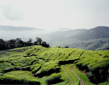
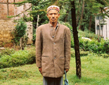
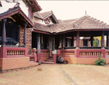
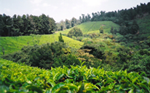
A pioneer in developing biodynamic coffee in India is David Hogg, resident manager at Nandanvan Estate, situated in the Palani Hills near Kodaikanal in Tamil Nadu state. A New Zealander by birth, David has made India his home, and in 1997 started the first full-scale experiment with biodynamically cultivated arabica coffee. Nandanvan is essentially a coffee garden attached to a bungalow with a glorious view of the Ghats. The estate comprises 28 acres of coffee planted at an elevation of 4500 feet along a steep hillside. It is picked, processed, roasted, ground, and packed entirely on the farm.
Biodynamic activities complement other estate routines such as coffee processing, utilizing innovative racks for coffee drying, and attention to cup quality. Nandanvan organic coffee has been developed into a brand – Moca Café, an up-scale coffee bar in Chennai run by Spaniard Marc Tormo, exclusively serves and retails 'Nandan Royale' as a single-origin, single-estate specialty coffee, certified by the Swiss Institute for Marketecology (IMO). For this niche estate brand, selling into the domestic market in value-added form is working out to be more profitable, as international marketing entails additional expense.
Nourishing The Body
Steiner called the soil an organ of the agricultural body. Maintaining soil fertility and vitality requires compost, made from farmyard manure and plant material, as fertilizer. The ideal approach is to produce the compost on site, which is why at Poabs Organic Estates, situated in the Nelliyampathy Hills in Kerala state, so far the only Demeter-certified coffee estate outside of Central America, there are fully integrated systems to support biodynamic agriculture.
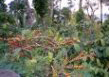
The 500-hectare Poabs Organic Estate, said to be the largest perennial multi-crop organic estate in the world, has an average elevation of 3500 feet, and grows coffee and tea along with inter-crops of pepper, cardamom, orange, and vanilla. Arabica and robusta coffees are planted over 280 hectares in two estate units. Certified by Demeter, the oldest organic certification label for biodynamic products, since April 2003, the estate is a veritable demonstration farm for biodynamic processes. Intrinsic to the system is the infrastructure for the arcane "preparations", which in the lexicon of biodynamic agriculture are coded BD 500 through BD 507, comprising cow manure and herbal formulations.
Poabs maintains 350 cows on the estate that supply the essential ingredient for what is known as cow horn manure. In this procedure, the dung of a lactating cow is stuffed into the hollow of cow horns, which are then buried in a pit in early autumn, and taken out in the following spring, by which time the contents have matured into manure rich in humus, resembling forest soil in the high ranges. The Poabs estate also maintains a nursery to grow the various herbs such as yarrow, chamomile, stinging nettle, dandelion and valerian, which are used in homeopathic doses as soil conditioners.
"We started the conversion to biodynamic agriculture in 2000, and after three years of regeneration, the estate is thriving," says Thomas Jacob, director of Poabs Group. "But getting to this point has required a lot of commitment, in terms of finance and will power. This estate dates back to 1889, and before the Poabs Group took over in 1989, it had lain abandoned for 16 years. We first worked on the infrastructure, such as putting in check dams, brought in tea as an additional crop, and enhanced the social welfare for the workers who had been neglected earlier. Compared to conventional farming, biodynamic agriculture requires practically double the effort. Fortunately, we have seen a significant drop in the incidence of pest and disease attacks ever since we converted our farm to biodynamic processes."
On such a scale, biodynamic agriculture turns into a corporate venture, primarily geared for green coffee exports. At Poabs, the motive is value creation: the improvement of farm property via sustainable and ethical choices. In today's market, that means amassing the relevant certifications. Besides receiving a certification through Demeter, Poabs is also farm certified by organic certifiers Naturland and Skal International, so that the estate conforms to requirements under NOP of USDA and JAS. BVQI of UK has awarded Poabs an ISO 9001:2000 rating for quality management systems at the farm, and HACCP norms are in place.
The Certification Loop
Varying national standards for organic foods in importing countries, and the recent U.S.-specific FDA bio-terrorism regulations, has Indian exporters worried. The multiple certifications required, (there are at least six major transnational organic certification agencies operating in India) are further hurdles for producers. Certification is expensive relative to the economies and currencies of developing countries, and also includes direct costs for inspection fees and farm infrastructure, to the extent that the sheer magnitude of the "organic bureaucracy" as Rainer Bächi of IMO states, is threatening to inhibit organic conversion. Indeed, Indian examples in tea and coffee prove that true blue biodynamic certification is restricted to large plantation companies. As the coffee industry is small-grower oriented, that perhaps also explains the rarity of biodynamic coffee projects worldwide, despite all the positive outcomes.
And there are plenty. Biodynamic agriculture has changed the face of every estate where these techniques have been adopted. The effects are visible in the richer soil and vegetation, increased bird-life and the better health of farm workers. Arguably, biodynamic estates epitomize sustainable agriculture in the most pristine form. Fears of a drop in yields, generally associated with organic conversion, prove to be unfounded, provided that the prescribed methods are followed judiciously. In fact, controlled experiments across different crops, including coffee, show an increase in output and plant growth. In India particularly, farm workers appear to be the most enthusiastic participants in the biodynamic adventure. They celebrate the values, and appreciate the tangible improvement in their working conditions, as they don't have to handle chemical fertilizers and pesticides. Visitors often remark on the palpable aura, the radiance of biodynamic estates.
The sub-text of the Indian experience with biodynamic agriculture reveals more than just the success of the practice. There is also the tension due to regulatory systems that morph into trade barriers, some cognitive dissonance with certifications presumed to facilitate market access and premiums but which don't quite pay off, and the fine balance between the traditional knowledge of the East and the intellectual capital of the West.
The Karma Bean
Biodynamic agriculture is not a panacea. It is essentially an evolved farming methodology. The coffee must stand up to quality evaluation at the cupping table of the specialty coffee roaster to reach the marketplace. But here's the definitive test: chromatography, which is used to visualize the quality of food, can be used to compare the attributes of conventional and biodynamic coffees. The vitality (in Sanskrit, the prana) in the biodynamic bean is unmistakable, and proves beyond doubt the efficacy of biodynamic agriculture.
According to Dr. Peter Proctor, the current biodynamic renaissance in India provides a showcase for the world, an inspirational model for agricultural transformation toward a healthier planet. Biodynamic agriculture in India is yielding some of the most distinctive single origin specialty coffees. For roasters and consumers, there's the comfort of being able to source and imbibe authentic plantation-grade socially and environmentally cultivated coffees. Good karma assured.
© Aparna Datta, 2004
Published in Fresh Cup magazine, Coffee Almanac June 2004
|