|
Drink kaapi, save the Western Ghats!
By Aparna Datta
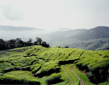
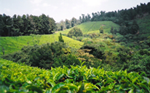
From the air, a wide-angle view of the Western Ghats in southern India would show a carpet of green, shola forests and grasslands interrupted here and there by craggy outcrops.
Zoom in closer – in certain sections of Chikmagalur and Kodagu districts in Karnataka and Wyanad in Kerala, the tall ficus, white cedars and mahogany trees belie the coffee bushes and pepper vines growing in symbiotic harmony.
Now, imagine this. Huge swathes of barren land, stripped of the trees that have been logged for timber, the coffee bushes burnt to clear the land for some other cash crop, even ganja.
Apocalyptic? Yes. Scare-mongering? Not quite. With the prices of coffee the world over at record lows, there is a real concern of an impending ecological disaster in the Western Ghats, should the coffee industry go into terminal decline.
Pioneer British planters started the commercial production of coffee in the late 1820s, primarily in Chikmagalur and Coorg. By 1870, around 1,20,000 hectares had been planted with coffee. Subsequently, pests, disease and poor prices whittled down the plantations, reaching a low of 72,400 hectares in 1941.
During the last 50 years, significant strides have been made in the development of disease-resistant varieties of coffee and in plantation management practices, with the Coffee Board’s research and extension wings playing a pivotal role. Today, India has bout 3,40,000 hectares of private coffee plantations, a majority of which are in the states of Karnataka, Kerala and Tamil Nadu.
The estates co-exist side-by-side with national parks teeming with flora and fauna. Wild boars and elephants still roam freely through the plantations and, being 100 per cent tree-shaded, the coffee estates support extensive bird-life.
Ornithologists have conclusively proved that one need not go only to bird sanctuaries to observe birds – a coffee estate would do as well! During the monsoons, the tree cover acts as a sponge and later feeds life-giving water to the east and west flowing rivers.
All this indicates the importance of coffee to the ecology of the Western Ghats. Over a span of nearly 200 years, the industry has integrated seamlessly into the region. Any change in land-use could have serious consequences in an area that is considered one of the world’s hot-spots in terms of bio-diversity.
This, then, is a wake-up call for environmentalists, consumer activists and voluntary organizations! An entire region is under threat. If the coffee industry goes under, it will impact not just the environment but the local community as well.
India has around 1,40,300 coffee plantations, with more than 98 per cent being owned by small growers holding 10 hectares or less, micro-enterprise at its best. Estate labour accounts for over 5,35,000 persons. Factor in the number of dependants and those directly or indirectly involved with the industry and a potentially explosive picture emerges.
What’s to be done? Quite simply: drink more coffee! The annual per capita consumption of coffee in India is a measly 55 gm (2001) and 70 gm (2005), with only 20 per cent of coffee production being absorbed locally, and over 80 per cent being exported. The vagaries of international trade imply that, for the stability of the Indian coffee industry, the long-term solution is to increase domestic consumption.
Environmentalists who understand the linkages have a crucial role to play. With their flair for advocacy and networking, activists could play a significant role in weaning youth away from colas and putting them onto a coffee-track.
This is not the time to gripe about the effluents produced by the washing of coffee beans, or on the use of pesticides and chemical fertilizers. Instead, positive energy should go into sensitizing the community, growers and consumers alike.
In any case, many growers are converting to organic cultivation and this supports the move towards sustainable coffee.
Back to the clarion call: Drink Indian coffee! With quantitative restrictions being lifted from April 2001, expect to see Colombian, Indonesian and Vietnamese coffees entering the domestic markets. Here again, consumer activists have a watch-dog role in checking the origin of coffee served at retail outlets; in running awareness campaigns for retailers and the general public.
Choice is all very well, but not when it hurts the domestic industry, not when in cup quality the better Indian coffees rate pretty well. Coffee is a swadeshi beverage. ‘Buying Indian’ takes on a new meaning once the socio-economics behind a cup of coffee are understood.
Trouble is, certain policies actually inhibit the penetration of coffee in India. Take, for instance, the high duties of 35 to 70 per cent levied on various types of coffee equipment – roasting machines, vending machines, espresso machines.
The Indian consumer today is more experiential and dispensing systems must match the enhanced expectations. The Finance Ministry would do well to reduce the customs duties that would help expand the consumer franchise.
Some initiatives are being taken by coffee growers to popularize Indian coffee. These grassroots efforts could gain momentum via environmentalists, consumer activists and community-based organizations. Consumers at large must embrace the movement.
To maintain the social and environmental integrity of the Western Ghats, nothing short of a revolution will do.
© Aparna Datta, 2001
Published in The Economic Times, Bangalore February 5, 2001
|